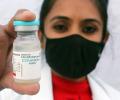
Nearly 50 million doses of Bharat Biotech's COVID-19 vaccine, Covaxin lying with the firm are set to expire early next year as there are no takers owing to poor demand, company sources said.

'There is no shortage of any APIs (active pharmaceutical ingredients) in the country'

The government has allowed import and export of COVID-19 vaccines without any value limitation, in order to ensure speedy clearance and distribution. The Central Board of Indirect Taxes and Customs (CBIC) has amended the regulations to facilitate the import/export of COVID-19 vaccines through courier, at locations where the Express Cargo Clearance System (ECCS) is operational. "Imports and exports of vaccines in relation to COVID-19 has been allowed without any value limitation," said the amended Courier Imports and Exports (Electronic Declaration and Processing) Amendment Regulations, 2020.

India imported goods worth $4.23 billion in June from sanctions-hit Russia, up 6.8 times as compared to last year, as demand for shipments of crude oil grew at the fastest pace during the month. Crude oil worth $3.02 billion was imported in June, which translates into a share of 71 per cent of the total imports from Russia, commerce and industry ministry data showed. Similarly, during the April-June quarter, India's imports from Russia were valued at $9.27 billion, up 369 per cent on year.

The Union Cabinet on Wednesday approved the signing of a comprehensive economic cooperation agreement, a kind of a free trade pact, between India and Mauritius which is aimed at liberalising norms to boost two-way commerce

We have the workforce, now we need to ensure that we take full advantage of game-changing technologies and geopolitical openings, suggests Jayant Sinha, chairman, Parliament's Standing Committee on Finance.

'If private capex has to kick in, there should at least be 2-3 years of visibility.'
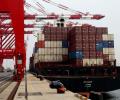
On the back of rising crude oil purchases, India's bill for imports from sanctions-hit Russia jumped 3.5 times in a year in April to $2.3 billion, showed data from the commerce ministry. In April, India's crude oil imports from Russia were valued at $1.3 billion, 57 per cent of India's total inbound shipments from Russia. Other major imported items during the month included coal, soybean and sunflower oil, fertilisers, and non-industrial diamonds. That month, Russia was also the fourth-largest crude petroleum supplier to India, after Iraq, Saudi Arabia, and the United Arab Emirates (UAE).

India must be prepared to deal with climate disasters, geopolitical confrontations, and social strife linked to global events, asserts Jayant Sinha, chairman of Parliament's Standing Committee on Finance.

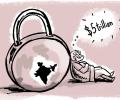
India will need $8 trillion (around Rs 588 lakh crore) of gross capital formation or new greenfield assets to become a $5 trillion (around Rs 368 lakh crore) economy by FY2027, a report said. The report by Deloitte said despite the COVID-19 disruption, FDI inflow into the country provides necessary optimism and display underlying strengths of the Indian economy. In FY2020-21, FDI inflows (including equity, re-invested earnings, and capital) amounted to a record $81.72 billion, 10 per cent higher than the previous financial year, it said.

India's medical devices imports surged 41 per cent to touch Rs 63,200 crore in 2021-22, led by a 48 per cent year-on-year (YoY) jump in imports from China to Rs 13,538 crore, the commerce ministry data analysed by the Association of Indian Medical Device Industry (AiMeD) has showed. Local industry players say this has led to several small and medium units to shut shop. Rakesh Vaid of Usha Fabs, a garments exporter, had started making N95 masks in his Gurgaon factory during the peak of the Covid-19 pandemic.

This import duty exemption would remain in force till October 31 this year.

Nangiohbok Rymbai, a graduate in economics who works as a daily wage labourer in Shillong, tells Rediff.com's A Ganesh Nadar what he would like to see in Finance Minister Nirmala Sitharaman's Budget.
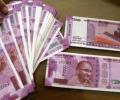
With India's imports exceeding exports, weak rupee does more harm than good. Analysts, however, say that rupee depriciation is positive for export-oriented sectors such as IT services, pharmaceuticals, textiles and automobiles

The country's drug companies have attracted the highest number of enforcements from the American drug regulator in 2013, a year that has seen the US Food and Drug Administration turning stricter to ensure compliance levels and quality of medicines.

'We would like to develop Andhra Pradesh into a logistics hub not only for India, but also for South Asia.'

Reliance Industries chairman Mukesh Ambani might have made news for purchasing the most expensive beach-side villa in Dubai recently, but he is not the only Indian eyeing the city for investment. Since Dubai allowed foreign investors full ownership in specific sectors in June 2021, a horde of Indian companies have moved or expanded into the desert city. The list even includes a kindergarten, an elementary and middle school, and a hotel that has sought 100 per cent ownership.

State Bank of India, the nation's largest lender, has stopped processing transactions of Russian entities that have been sanctioned by the West over Moscow's invasion of Ukraine, sources said. To effect this, SBI has issued a circular as it fears that any transaction with entities or sectors under sanction will invite sanction on it as well, sources said. No transactions involving entities, banks, ports or vessels appearing on a US, European Union or United Nations sanctions list would be processed irrespective of the currency of the transaction, they said. Payments due to such entities have to be processed by other mechanism rather than through the banking channel, sources added.
Indian pharmaceutical companies are heavily dependent on China to source fermentation-based active pharmaceutical ingredients and intermediates to manufacture these medicines, but the coronavirus outbreak there has disrupted the supply.

With all major US export-oriented drug manufacturing plants in the country up for inspection in 2022, some estimates peg that at least 20-30 per cent of the new product launches lined up for the US will be subject to on-site inspection by the US Food and Drug Administration (USFDA). The last two years saw limited physical inspections due to travel restrictions during the pandemic. "Pre-Covid, the frequency and number of inspections of manufacturing plants in India by USFDA had increased significantly," analysts from ICICI Securities Research noted. "With growing ANDA filings, especially for complex products. "We expect this trend to return with the environment normalising," analysts from ICICI Securities Research noted.

'And Joshimath has already shown the dangers ahead.' 'We have to acknowledge that our mountains are still young babies.' 'You don't put an extra load on the back of a growing child!'
'Taking serious note of the action by unscrupulous elements to malign the Indian generic pharma industry, the embassy of India, Beijing, has been requested to lodge a strong protest with concerned Chinese authorities and also to impress upon them to take stringent action against such unscrupulous elements,' a commerce ministry statement said in New Delhi.

There is no direct impact of the Russia-Ukraine crisis on India in terms of bilateral trade but a surge in oil prices poses considerable risk to the economy, an analyst report said on Friday. International oil prices which have surged past $100 per barrel "pose risks to external stability and currency movement," a Bank of Baroda Economics Research report said. Russia has launched military operations against Ukraine, stoking fears of significant disruption in the region, including loss of life. The West is ramping up financial sanctions against Russia and support for Ukraine.

As its factories resumed operations after over two-month of grim battle against coronavirus, China is busy tapping into the vast business opportunities of export of key medical goods, specially ventilators and personal protection equipment (PPE), across the world, including India, where both private and government bodies are placing orders for the import of these products.

The facility, which will manufacture nicotine and nicotine salts, will conform to stringent US and EU pharmacopoeia standards that define purity levels at 99.2 per cent for nicotine meant for pharmaceutical products. ITC will leverage the institutional capabilities of its century-old leaf tobacco business for this. ITC's cigarettes business saw disruptions across the value chain with the onset of the Covid-19 pandemic. The company mentioned in its annual report that with easing of restrictions and improvement in mobility from September 2020 onwards, the business recovered progressively over the remainder of the year to reach nearly pre-Covid levels towards the close of the year.

India remains an attractive destination for foreign direct investments (FDI) on account of healthy prospects of economic growth and its skilled workforce, according to a survey by Deloitte. A large proportion of international business leaders remain confident in India's short- and long-term prospects and are readying plans to make additional and first-time investments in the country, it said on Tuesday. "The survey, which questioned 1,200 business leaders of multinational corporations in the US, UK, Japan and Singapore, found that India remains an attractive destination for investments, scoring highly for its skilled workforce and prospects for economic growth," the survey - India's FDI Opportunity - said.

The guidelines listed several services including government and private offices that will be out of bounds during the period, while exempting establishments such as hospitals, ration shops, dairies, banks, insurance offices, and print and electronic media. Delivery of all essential goods including food, pharmaceuticals, medical equipment through e-commerce has also been exempted from the purview of the lockdown.

'India is a pharma dada. We can manufacture enough for our people and for the world.'

Of the 23 companies, eight have raised funds after Shark Tank India.

'Private banks are well-placed to deliver good performance over the next six months.'

Recently, Prime Minister Narendra Modi met over 40 CEOs across broad swathes of industry, ranging from makers of mobile devices, auto components, food products to telecom networking equipment and pharmaceuticals. The agenda: To discuss how to make India an integral part of the global supply chain. The focus of the discussion would be the much touted yet not so well understood production-linked incentive scheme (PLI), the centrepiece of the government's drive to massively boost the manufacturing sector. To do so, the government has created a war chest of over Rs 197,000 crore to be paid out as incentives to over 14 industries in five years. There are three objectives to the scheme, two explicitly stated, one implied.

Maharashtra Chief Minister Uddhav Thackeray announced a statewide curfew for 15 days from 8 am on April 14 to contain the rapid spread of the coronavirus in its second wave. With Section 144 being imposed across the state, Thackeray essential services have been exempted from the restrictions. The curfew will be in place till 7 am on May 1.

The Serum Institute of India has informed the Centre that it will be able to supply around 22 crore doses of Covishield in October as the Union government has announced resuming export of surplus Covid vaccines in the coming fourth quarter under the 'Vaccine Maitri' programme, official sources said.

The recovery was led by pharma majors led by Dr Reddy's Labs.
As marketing rights for off-patent drugs in the US become less exclusive, companies are scrambling for fresh strategies to make up for the revenue loss.

'Investors need to expect steady returns over the next one to two years with bouts of high volatility.'

Ankleshwar plant is the third such facility to face action
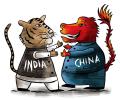
Indian auto and pharma industries import several critical components and raw materials from China.

Prime Minister Narendra Modi said on Wednesday that international travel should be made easier through mutual recognition of vaccine certificates, amid several countries adopting different sets of rules to allow foreigners to enter their territory in the wake of the COVID-19 pandemic.
